Although Ivor Gurney and Frederick William Harvey both attended the King’s school, it was a chance meeting on a tram in 1908 that sparked their close friendship. At that time Gurney was articled to the organist of Gloucester Cathedral, Herbert (later Sir) Brewer, where he studied music alongside Herbert Howells and Ivor Novello, whereas Harvey was articled to a local solicitor, but his mind was far more preoccupied with poetry. Will took Ivor to visit ‘Redlands’, his family home at Minsterworth, where he found ‘a ready welcome, good conversation, companionship, and a grand piano!‘ Whilst it could be said that Ivor’s Godfather and mentor the Rev. Alfred Cheesman introduced him to literature including Kipling, Tennyson, Housman and other ‘moderns’ it was through his new friend and their shared love of poetry that Gurney discoverd the Elizabethans: Fletcher, Nashe, Ben Jonson and, above all, Shakespeare.(1)
However for Howells and Gurney it was their attendance at the Three Choirs Festival in Gloucester 1910 that proved to be the catalyst for their ambitions’ as composers. In the programme was Fantasia on a Theme by Thomas Tallis by Ralph Vaughan Williams, so unlike anything they had heard before, and so essentially English. Just a year later Gurney won an open scholarship to the Royal College of Music where his composition teacher Sir Charles Villiers Stanford later claimed that of his many famous students Ivor was potentially “the biggest of them all..”(2) It was here he met Marion Scott, the Secretary to the RCM and editor of the RCM Magazine, who was to become an influential figure in his life.
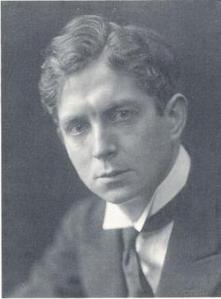
Ivor Bertie (pronounced Bartie – giving rise to his nickname ‘Bartholomew’) was the second of four children born to David and Florence Gurney. His father was a local tailor and by his sister Winifred’s account a kindly man, however, his mother was highly-strung and somewhat unstable causing life at home for Ivor and his siblings to be far from placid or easy.
It was to be time spent with another family group that helped to sustain Ivor during the war and he wrote regularly to his friends the Chapmans at High Wycombe. After his initial attempts to join up ended in failure due to his poor eyesight Gurney spent the autumn of 1914 back at the Royal College of Music and his weekends as an organist at Christ Church, High Wycombe. Edward Chapman was the churchwarden there and his wife and four children drew Ivor into their family, enveloping him in their games, walks in the country and songs at the piano. In fact Gurney became so attached to the eldest daughter, Kitty, he proposed marriage, but he was refused on the grounds that she was too young at only seventeen.(3) Yet these were to be some of his happiest memories.
Gurney had tried to enlist alongside Harvey in the 1/5th Glosters at the start of the War. His second attempt in February 1915 was successful, but he was sent to join the 2/5th Glosters as a Private. Howells, medically unfit to serve, was spared the horrors of conflict. As Ivor prepared to depart for Laventie on the Somme, Herbert dedicated his Piano Quartet in A minor: ‘To the Hill at Chosen and Ivor Gurney who knows it’. Chosen Hill in Gloucestershire had been their favourite walking place.(4)
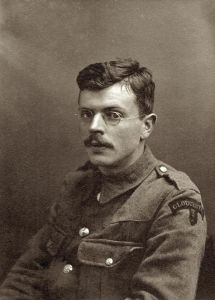
Severn Meadows
Only the wanderer
Knows England’s graces,
Or can anew see clear
Familiar faces.
And who love joy as he
That dwells in shadows?
Do not forget me quite,
O Severn meadows.(5)
On 25 May 1916 the 2/5th Glosters sailed to Le Havre and marched towards Flanders. Gurney, who was a signaller, turned more and more to writing verse whilst in France, despite the difficult conditions he was also composing music and produced at least four songs thought to be of a high quality. These included By a Bierside, John Masefield’s poem set to music, In Flanders by Will Harvey and Gurney’s own Severn Meadows.
In Flanders
I’m homesick for my hills again –
My hills again!
To see above the Severn plain,
Unscabbarded against the sky,
The blue high blade of Cotswold lie;
The giant clouds go royally
By jagged Malvern with a train
Of shadows. Where the land is low
Like a huge imprisoning O
I hear a heart that’s sound and high,
I hear the heart within me cry:
‘I’m homesick for my hills again –
My hills again!
Cotswold or Malvern, sun or rain!
My hills again!’(6)
Harvey and Gurney met on the morning of 16 August 1916, they chatted and Harvey lent Gurney his pocket edition of Robert Bridges’ ‘The Spirit of Man’. Later that day Harvey, now a decorated officer, went out alone across no-man’s land preparing to lead an attack that night. In a letter to Marion Scott on 24 August, Gurney wrote: ‘Willy Harvey, my best friend, went out on patrol and week ago, and never came back…. Ah his name is a part of autumn – and a Gloucester autumn – to me. And the falling of leaves has one more regret for me for ever’.(7) Will was engaged to marry an Irish nurse, Sarah Anne Kane, and Gurney devastated by his loss poured his feelings into his poem ‘To His Love’ with her at the forefront of his mind. However, Harvey had not been killed but captured by the Germans spending the remainder of the war in seven different prison camps.
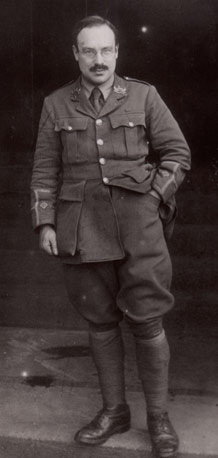
Meanwhile, Gurney shot in the arm on 7 April 1917 spent some time at a military hospital in Rouen before being transferred to a machine gun battery at Passchendaele. Only one month later, on 17 September, he was gassed at St. Julien, invalided back to Britain and sent to Bangour War Hospital in Edinburgh. It was here that he started a love affair with Scottish VAD nurse Annie Nelson Drummond who became his muse. Hoping to replicate Will’s happiness with Sarah, Ivor turned to Annie for salvation from his troubles.(8) Whilst his devotion remained firm the relationship faded as Gurney bounced between military training and one hospital to another narrowly avoiding being sent back to France and following a thwarted suicide attempt in June 1918 he was sent to Lord Derby’s War Hospital in Warrington for treatment of a nervous breakdown.
Discharged from the Army just prior to the end of the war, Ivor was finally able to reconnect with Will on his return from captivity and return to his studies at the Royal College of Music. His second volume of verse War’s Embers was published in 1919 following the modest success of Severn and Somme in 1917 and his productivity reached new heights during 1920 and 1921 creating dozens of songs. Sadly his mental health slowly deteriorated and he was admitted to Barnwood House mental hospital in September 1922. After injuring himself in a desperate night-time escape he was transferred to the City of London Mental Hospital in Dartford, Kent.

Ivor could not know, but Annie was to marry another of her patients just weeks before he was declared insane in September 1922. Sgt. James L McKay had been admitted to Edinburgh War Hospital in April 1919 for treatment on a concussed eardrum. The couple became engaged and moved out to America marrying in a simple ceremony in Wellesley, Massachusets. After her mother’s death, Peggy Ann discovered the poetry book (Poems of To-Day) Ivor had sent her to mark the anniversary of their first meeting along with a score of his set of Housman songs ‘The Western Playland’ (dedicated to her years after they had parted) in an old leather suitcase tucked away in her clothes closet.(9)
Gurney continued to write songs and poetry whilst in the asylum with all his work carefully collected and catalogued by Marion Scott in the hope of further publication. However, his physical removal from the countryside that inspired him remained a constant torture. His health was failing and ill with tuberculosis he died on 26 December 1937 being finally allowed to return to his beloved Gloucestershire to be buried at Twigworth Church. His Godfather, Canon Cheesman officiated, Herbert Howells played the organ and Will Harvey dropped into the grave a final tribute to his friend – a small sprig of rosemary with a tiny handwritten tag ‘Rosemary for Remembrance’.(10)
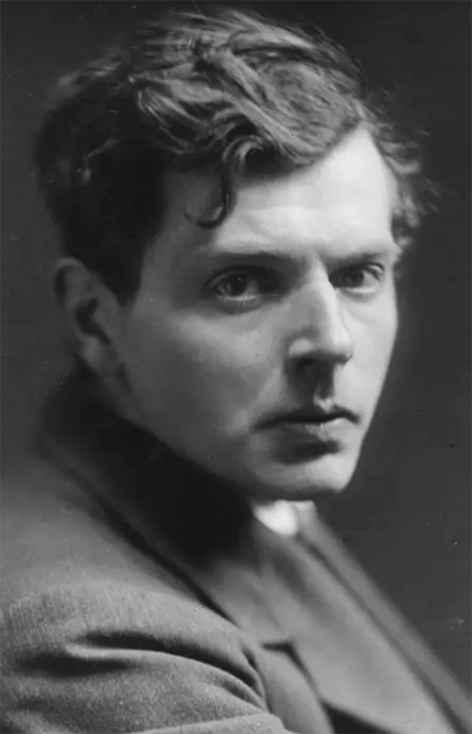
The three friends were to all make their mark. Ivor Gurney would leave 300 songs, 900 poems and a variety of musical compositions. Will Harvey was to publish six books of poems and a series of radio broadcasts, while Herbert Howells created a legacy of choral composition of the highest order and of great significance to Gloucester Cathedral and its musicians today.(11)
Gurney was one of the brightest musical lights of his generation, but much of his work has rarely been performed. The centenary of the 1st World War prompted a resurgence of interest with new performances of the ‘The Western Playland (and of Sorrow)’ by the New England Light Opera in Brookline, Massachusetts (2014), a choral anthem ‘God Mastering Me’ sung by the Choir of Gloucester Cathedral (2016), the Australian premiere of ‘A Gloucestershire Rhapsody’ (2017). Followed by a recital of English music at the Ivor Gurney Hall, King’s School, Gloucester, in May 2019 featuring The Western Playland (and of Sorrow) the setting for A E Houseman’s poems sensitively performed by the young musicians of the Carducci String Quartet.(12)
It is not clear how Ivor Gurney was able to cope with his mental health issues and still continue to write these incredible songs and poems, although his mental state could have formed part of his creative output. Nigel Foster (LSF) confirms Gurney’s later work is now being re-evaluated and seen as equal to his greatest works of previous years.(13) Listen to the The London Song Festival performance 15 December 2020: Roads to Solace: He That Dwells in Shadows: The Songs and Poetry of Ivor Gurney (1890-1937) which sought to explore his search for solace through his music and poetry.
Header image © Jacky Dillon (Wisteria, Gardens, Hinton Ampler NT)
Images: Herbert Howells – interlude.hk, Ivor Gurney – Trustees of Ivor Gurney Estate – bostonglobe.com, Frederick William Harvey, commonswikimedia.org., F.W. Harvey c1916 – blog.exeter.ac.uk, V.A.D. Annie Drummond c1916 – Biographies of Gurney’s Contemporaries geneva.edu., Ivor Gurney c1920 – Photograph of Ivor Gurney,” by Hall, R.. First World War Poetry Digital Archive, accessed September 10, 2023, http://ww1lit.nsms.ox.ac.uk/ww1lit/collections/item/6943
____________________________________________________________________________________________
(1) Boden, Anthony, Biographical Outline – The Ivor Gurney Society, 2007
(2) ibid.
(3) Rawling, Eleanor M., Ivor Gurney’s Gloucestershire: Exploring Poetry & Place, The History Press, Stroud, Gloucestershire (2011) p44
(4) Ibid – Biographical Outline – The Ivor Gurney Society
(5) Gurney, Ivor, ‘Song (Severn Meadows)’ verse published in ‘Severn and Somme’, Sidgwick & Jackson, London (1917)
(6) Harvey, F.W., In Flanders, (1916) published in the anthology The Muse in Arms, John Murray, London (1917)
(7) (Gurney’s letter to Marion Scott, 24 August 1916) Ibid Ivor Gurney’s Gloucestershire: Exploring Poetry & Place p51
(8) Kennedy, Kate, Dweller in Shadows: A Life of Ivor Gurney, Princeton University Press, Princeton & Oxford (2021) p162-206
(9) Blevins, Pamela, Annie Nelson Drummond McKay (1887 – 1959), Biographies of Gurney’s Contemporaries, 2000
(10) Ibid – Biographical Outline – The Ivor Gurney Society
(11) Condor, Tony, Let’s Talk: The Chosen Trio – Howells, Harvey and Gurney, Gloucester Choral Society, planned for 27 February 2020, Event cancelled due to covid.
(12) Quinn, John, Review for IG Society Newsletter Oct 2019, of A Recital of English Music at the Ivor Gurney Hall, King’s School, Gloucester 12 May 2019.
(13) Nigel Foster, The London Song Festival, Roads to Solace, He That Dwells in Shadows, The Songs and Poetry of Ivor Gurney (1890-1937) – Performance Tuesday 15 December 2020 – View programme & notes – listen to concert posted on YouTube LSF
 England Remembered